
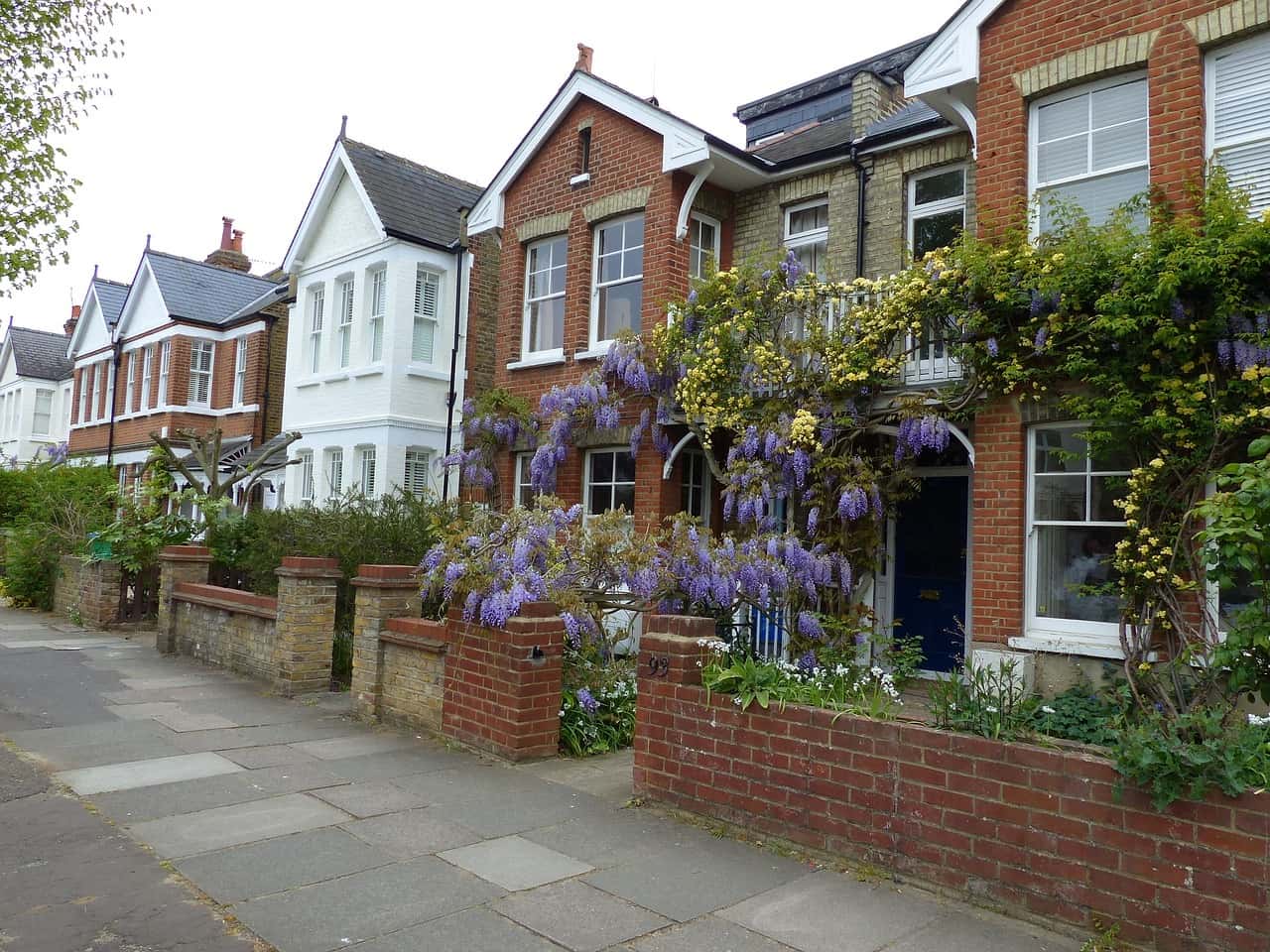
Residential surveyor in Tooting
Much of Tooting’s housing dates from the decades either side of 1900, including the London County Council’s Totterdown Fields estate, built between 1901 and 1911 as the first of its cottage estates. It is in the London Borough of Wandsworth, with Victorian and Edwardian terraces around the high streets and Tooting Bec and Tooting Graveney commons.
Level 2 from £649, Level 2 Plus from £849, Level 3 from £895, including all taxes and fees.
- SW17
Local property context
What matters when surveying in Tooting
Tooting buyers are mostly looking at a terraced house, a flat in a converted terrace or a flat above a shop, with the Totterdown Fields cottages as a distinct group of their own. The survey needs to separate ordinary wear on houses around a century old from alterations such as loft conversions and replaced roofs and windows, and to note where drainage and surface water need closer attention.
A Level 2 or Level 2 Plus often suits a flat in a well-kept conversion or an unaltered terrace. A Level 3 is usually the better choice for a Totterdown Fields cottage that has been altered, a whole house with a loft or rear extension, or a flat above a shop where access to the roof and rear is limited.
Local knowledge for Tooting buyers
Totterdown Fields was the first of the London County Council’s cottage estates. The council bought the land in 1899 and built the cottages between 1901 and 1911, with W. E. Riley as Superintending Architect and Owen Fleming responsible for the layout. The two-storey cottages are set in terraces on a grid of streets, mostly in yellow stock brick with some red brick and roughcast upper storeys, slate roofs and Tudor-style chimneys.
The estate has been a conservation area since 1978, and an Article 4 direction made in 1990 means changes to front boundaries, windows, doors, roofs and front hardstandings need planning permission. The council’s appraisal highlights non-matching roof materials, PVCu windows and painted brickwork as the changes that have harmed the cottages. The appraisal is not entirely consistent about which addresses the direction covers, so it is worth confirming for a particular property.
Wandsworth’s flood risk assessment describes London Clay with very limited permeability beneath the northern part of the River Wandle catchment, and an urban catchment that responds quickly to rain. On ground like this surface water can collect after heavy rain, so the Environment Agency surface water map is worth checking, and the survey looks at gutters, gullies and the drainage around rear extensions.
Property types in the area
- LCC cottage terraces on the Totterdown Fields estate
- Late Victorian and Edwardian terraces
- Terraces converted into flats
- Flats above shops on the high streets
- Post-war council and later purpose-built blocks
Condition themes to consider
These are prompts for inspection, not a prediction that a particular home has a defect.
- Clay shrinkage movement near street trees
- Non-matching roof materials and replaced windows
- Loft conversions and rear dormers
- Surface water and drainage on clay ground
- Fire separation in converted terraces
- Access and repairs for flats above shops
Before exchange of contracts
- For a Totterdown Fields cottage, ask the conveyancer to check permission for any changes to windows, roofs or the front garden.
- Ask for building regulations sign-off for any loft conversion or rear extension.
- For a flat above a shop, ask how the roof and rear walls are reached and who repairs them.
- Check the Environment Agency surface water result for the address before the survey.
Tooting survey questions
- Can I replace the windows on a Totterdown Fields cottage?
- Usually only with planning permission. Wandsworth Council’s Article 4 direction for the estate covers windows, doors, roofs and front boundaries, and its appraisal criticises PVCu replacements and non-matching roofs. JBS Surveying records the windows and roof as found, and your conveyancer should check whether past changes were approved.
- Which survey do I need for a property in Tooting?
- A Level 2 or Level 2 Plus often suits a flat in a well-kept conversion or an unaltered terrace. A Level 3 is usually the better choice for a Totterdown Fields cottage that has been altered, a whole house with a loft or rear extension, or a flat above a shop where access to the roof and rear is limited.
- How much does a home survey cost in Tooting?
- For homes up to £500,000, JBS Surveying charges from £649 for a Level 2, £849 for a Level 2 Plus and £895 for a Level 3, including all taxes and fees. Fees rise in steps with the property’s price, so we confirm the exact fee in writing once we know the price and the property.
- What problems do surveyors often find in Tooting homes?
- Common themes in Tooting include clay shrinkage movement near street trees, non-matching roof materials and replaced windows, loft conversions and rear dormers and surface water and drainage on clay ground. These are prompts for the inspection, not a prediction that a particular home has a defect; the report rates each part of the property and says what to do next.
- Is Tooting at risk of subsidence or flooding?
- Much of south west London sits on London Clay, which shrinks and swells with moisture, while land nearer the Thames lies on river gravels and alluvium, where groundwater and flood risk matter more than clay shrinkage. Ground conditions vary street by street: the British Geological Survey GeoIndex shows the geology for an address, and the Environment Agency’s long term flood risk service shows the flood risk for the postcode. The survey reports any signs of movement or damp it finds and when to involve a structural engineer or insurer.
- Do you cover SW17?
- Yes. JBS Surveying is based in Queen’s Park, NW6, and surveys homes in Tooting (SW17) and across London. Joe Weaver, AssocRICS, RICS Registered Valuer and MRPSA, inspects every property and writes every report. Level 2 and Level 2 Plus reports are typically issued within 5 working days of the inspection and Level 3 reports within 7.
Tooting survey enquiries
Tell us about the property before you choose
Send the Tooting postcode, sales particulars and any concerns you already have. JBS will confirm coverage and explain which survey level appears proportionate before you book.
Official guidance and further reading
These independent sources explain the wider professional, legal and maintenance context. They do not replace advice about the particular property or its title.
- Wandsworth CouncilTotterdown Fields Conservation Area appraisalThe first of the London County Council’s cottage estates, built between 1901 and 1911, and its Article 4 controls.
- Wandsworth CouncilLevel 1 Strategic Flood Risk AssessmentTidal, river, surface water and groundwater flood risk, the Thames defences, the River Wandle and the local geology.
- GOV.UKCheck the long term flood risk for an area in EnglandEnvironment Agency flood risk from rivers and the sea, surface water, reservoirs and, where data exists, groundwater.
- RICSHouse surveys: the costs, types and benefits of oneHow property age, condition and complexity influence the appropriate level of home survey.
- GOV.UKHow to buy a homeGovernment guidance on surveys, legal work and the wider home-buying process in England and Wales.
- GOV.UKBuying or owning a leasehold homeAn explanation of leasehold ownership, responsibilities, service charges and permissions.
Survey options in Tooting
All three follow the RICS Home Survey Standard and use the same condition ratings. The difference is how much the report explains, and all three are available in Tooting.
Level 2 Home Survey
Conventional houses and flats in reasonable condition
from £649
Report typically 5 working days after the inspection
Level 2 Plus Home Survey
Converted, period or higher-value flats, and well-kept homes where you want more explanation
from £849
Report typically 5 working days after the inspection
Level 3 Building Survey
Older, larger, altered or unusual properties, or where you plan significant work
from £895
Report typically 7 working days after the inspection
Valuations from £325. See valuations
Neighbouring areas we cover
South West London
Balham
Balham’s housing dates mostly from the late Victorian and Edwardian decades, laid out in streets of red-brick terraces and semi-detached houses between Clapham and Tooting Bec Commons. Most of the area is in Wandsworth, while the Hyde Farm Estate on its eastern edge is in Lambeth.
View area guidanceSouth West London
Wimbledon
Wimbledon has an old village on the hill beside Wimbledon Common and a town below it that grew after the railway opened in 1838. It is in the London Borough of Merton, with large Victorian and Edwardian houses on and around the hill, terraces in the town and towards Raynes Park, and mansion blocks and newer flats near the centre.
View area guidanceSouth West London
Streatham
Streatham is a long town centre on the high road between Streatham Hill and Streatham Common, in the London Borough of Lambeth. Its housing includes large 19th century suburban houses, the Leigham Court Estate built by the Artizans’, Labourers’ and General Dwellings Company between 1889 and 1928, and early to mid 20th century mansion blocks on Streatham Hill.
View area guidanceSouth West London
Wandsworth
Wandsworth Town grew where the River Wandle meets the Thames, and SW18 spreads south from there through the streets around Wandsworth Common to Earlsfield and Southfields. Most of the housing is Victorian and Edwardian, with 1930s council estates in Earlsfield, early 20th century terraces in Southfields and newer flats along the river and in the town centre.
View area guidance