
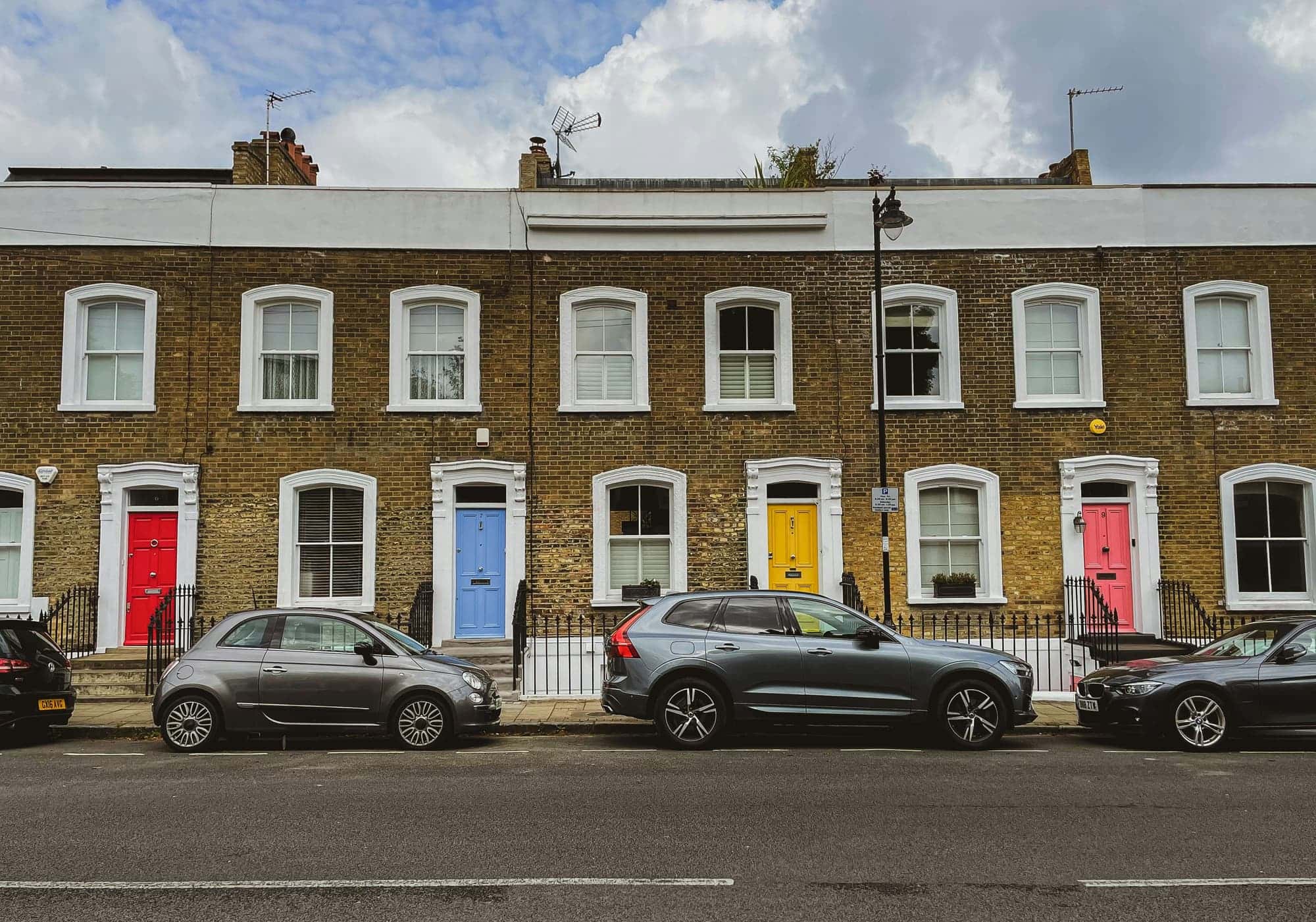
Residential surveyor in Streatham
Streatham is a long town centre on the high road between Streatham Hill and Streatham Common, in the London Borough of Lambeth. Its housing includes large 19th century suburban houses, the Leigham Court Estate built by the Artizans’, Labourers’ and General Dwellings Company between 1889 and 1928, and early to mid 20th century mansion blocks on Streatham Hill.
Level 2 from £649, Level 2 Plus from £849, Level 3 from £895, including all taxes and fees.
- SW16
- SW2
Local property context
What matters when surveying in Streatham
Streatham buyers are choosing among large Victorian houses, many now divided into flats, the houses and maisonettes of the Leigham Court Estate, and flats in the mansion blocks on Streatham Hill. Each carries different risks: the shared fabric and conversion standard in divided houses, original features and controls on the estate, and service charges and major works in the blocks.
A Level 2 Plus suits most flats in mansion blocks and converted houses. A Level 3 is the better choice for a large Victorian house, for a Leigham Court Estate house with alterations, or for a property on a sloping site with visible cracking. A Level 2 can suit a newer flat in a well-managed block.
Local knowledge for Streatham buyers
The Leigham Court Estate was built between 1889 and 1928 by the Artizans’, Labourers’ and General Dwellings Company on streets such as Amesbury, Barcombe, Cricklade, Downton and Hailsham Avenues. It mixes terraced houses, maisonettes and flats in red and yellow stock brick with terracotta details, clay tiles to the front and slate to the rear, roughcast and tile hanging, turrets and dormers. An Article 4 direction made in 1996 brings changes to the appearance of houses under planning control, and Lambeth’s guidance says enforcement is taken against unauthorised window replacement.
The Streatham High Road and Streatham Hill Conservation Area, designated in 1999 and revised in 2024, combines a late 19th century high road with early to mid 20th century mansion blocks on Streatham Hill. Leigham Court Road South has large 19th century suburban houses, several now divided into flats. For a flat in a large divided house, repair responsibility for the roof and main walls, and the fire and sound separation between flats, are the central questions.
At the southern end, the Streatham Common Conservation Area surrounds a common that rises and becomes wilder away from the high road. Where streets climb, the survey looks closely at cracking, drainage and retaining walls, and the mapped geology for the address is worth checking alongside nearby trees.
Property types in the area
- Large Victorian suburban houses
- Victorian and Edwardian terraces
- Model estate houses and maisonettes on the Leigham Court Estate
- Early to mid 20th century mansion blocks
- Houses converted into flats
- Flats above shops on the high road
Condition themes to consider
These are prompts for inspection, not a prediction that a particular home has a defect.
- Clay shrinkage movement near mature trees
- Roof coverings and chimneys on large Victorian houses
- Unauthorised window and roof changes under Article 4
- Service charges and major works in mansion blocks
- Fire separation in converted houses
- Movement and drainage on sloping ground
Before exchange of contracts
- For a Leigham Court Estate house, ask the conveyancer to check permission for replacement windows, roof changes or a new porch.
- For a mansion flat, ask for the service charge accounts, reserve fund and any notice of major works.
- For a flat in a divided house, find out who repairs the roof, chimneys and main walls.
- Mention any cracking or sloping floors you noticed, particularly on rising ground.
Streatham survey questions
- Do Leigham Court Estate houses need permission for new windows?
- Yes, in most cases. The estate’s 1996 Article 4 direction brings changes to the appearance of houses under planning control, and Lambeth Council says it takes enforcement action against unauthorised window replacement. JBS Surveying notes replaced windows and other visible alterations, so your conveyancer can ask whether they had permission.
- Which survey do I need for a property in Streatham?
- A Level 2 Plus suits most flats in mansion blocks and converted houses. A Level 3 is the better choice for a large Victorian house, for a Leigham Court Estate house with alterations, or for a property on a sloping site with visible cracking. A Level 2 can suit a newer flat in a well-managed block.
- How much does a home survey cost in Streatham?
- For homes up to £500,000, JBS Surveying charges from £649 for a Level 2, £849 for a Level 2 Plus and £895 for a Level 3, including all taxes and fees. Fees rise in steps with the property’s price, so we confirm the exact fee in writing once we know the price and the property.
- What problems do surveyors often find in Streatham homes?
- Common themes in Streatham include clay shrinkage movement near mature trees, roof coverings and chimneys on large Victorian houses, unauthorised window and roof changes under Article 4 and service charges and major works in mansion blocks. These are prompts for the inspection, not a prediction that a particular home has a defect; the report rates each part of the property and says what to do next.
- Is Streatham at risk of subsidence or flooding?
- Much of south west London sits on London Clay, which shrinks and swells with moisture, while land nearer the Thames lies on river gravels and alluvium, where groundwater and flood risk matter more than clay shrinkage. Ground conditions vary street by street: the British Geological Survey GeoIndex shows the geology for an address, and the Environment Agency’s long term flood risk service shows the flood risk for the postcode. The survey reports any signs of movement or damp it finds and when to involve a structural engineer or insurer.
- Do you cover SW16 and SW2?
- Yes. JBS Surveying is based in Queen’s Park, NW6, and surveys homes in Streatham (SW16 and SW2) and across London. Joe Weaver, AssocRICS, RICS Registered Valuer and MRPSA, inspects every property and writes every report. Level 2 and Level 2 Plus reports are typically issued within 5 working days of the inspection and Level 3 reports within 7.
Streatham survey enquiries
Tell us about the property before you choose
Send the Streatham postcode, sales particulars and any concerns you already have. JBS will confirm coverage and explain which survey level appears proportionate before you book.
Official guidance and further reading
These independent sources explain the wider professional, legal and maintenance context. They do not replace advice about the particular property or its title.
- Lambeth CouncilLeigham Court Estate Conservation Area guidanceGuidance for the Streatham model housing estate, including its materials and the alterations that need planning permission under its Article 4 direction.
- Lambeth CouncilStreatham High Road and Streatham Hill (CA54) conservation area profileThe late 19th century high road and the early to mid 20th century mansion blocks of Streatham Hill.
- Lambeth CouncilStreatham Common (CA43) conservation area profileThe common and the 19th century houses and buildings around its edges.
- GOV.UKCheck your long term flood riskEnvironment Agency flood risk from rivers, the sea, surface water and reservoirs for any address.
- RICSHouse surveys: the costs, types and benefits of oneHow property age, condition and complexity influence the appropriate level of home survey.
- GOV.UKHow to buy a homeGovernment guidance on surveys, legal work and the wider home-buying process in England and Wales.
- GOV.UKBuying or owning a leasehold homeAn explanation of leasehold ownership, responsibilities, service charges and permissions.
Survey options in Streatham
All three follow the RICS Home Survey Standard and use the same condition ratings. The difference is how much the report explains, and all three are available in Streatham.
Level 2 Home Survey
Conventional houses and flats in reasonable condition
from £649
Report typically 5 working days after the inspection
Level 2 Plus Home Survey
Converted, period or higher-value flats, and well-kept homes where you want more explanation
from £849
Report typically 5 working days after the inspection
Level 3 Building Survey
Older, larger, altered or unusual properties, or where you plan significant work
from £895
Report typically 7 working days after the inspection
Valuations from £325. See valuations
Neighbouring areas we cover
South West London
Brixton
Brixton developed in the early 19th century after the enclosure of Rush Common in 1806, and grew into a major town centre once the railway arrived in the 1860s. It is in the London Borough of Lambeth, with early 19th century villas and terraces, Victorian streets, mansion blocks around the town centre and 1930s apartment blocks on Brixton Hill.
View area guidanceSouth West London
Balham
Balham’s housing dates mostly from the late Victorian and Edwardian decades, laid out in streets of red-brick terraces and semi-detached houses between Clapham and Tooting Bec Commons. Most of the area is in Wandsworth, while the Hyde Farm Estate on its eastern edge is in Lambeth.
View area guidanceSouth West London
Tooting
Much of Tooting’s housing dates from the decades either side of 1900, including the London County Council’s Totterdown Fields estate, built between 1901 and 1911 as the first of its cottage estates. It is in the London Borough of Wandsworth, with Victorian and Edwardian terraces around the high streets and Tooting Bec and Tooting Graveney commons.
View area guidanceSouth West London
Clapham
Clapham grew around its common, where large houses were built in the 18th century, and filled out with Victorian and Edwardian terraces in the later 19th century. The area is split between Lambeth, which covers Clapham Old Town and the east and south sides of the common, and Wandsworth, which covers North Side, West Side and the streets towards Clapham Junction.
View area guidanceSouth West London
South West London
South West London covers the SW postcode districts, from the inner areas around Chelsea, Fulham and Kensington to the riverside and suburban districts south of the Thames in Lambeth, Wandsworth and Merton. The housing ranges from planned Victorian estates and Edwardian terraces to mansion blocks, large houses on the higher ground at Wimbledon and Putney, and new riverside apartments. Each district below has its own page because the stock, ground and planning controls change from one to the next.
View area guidance