
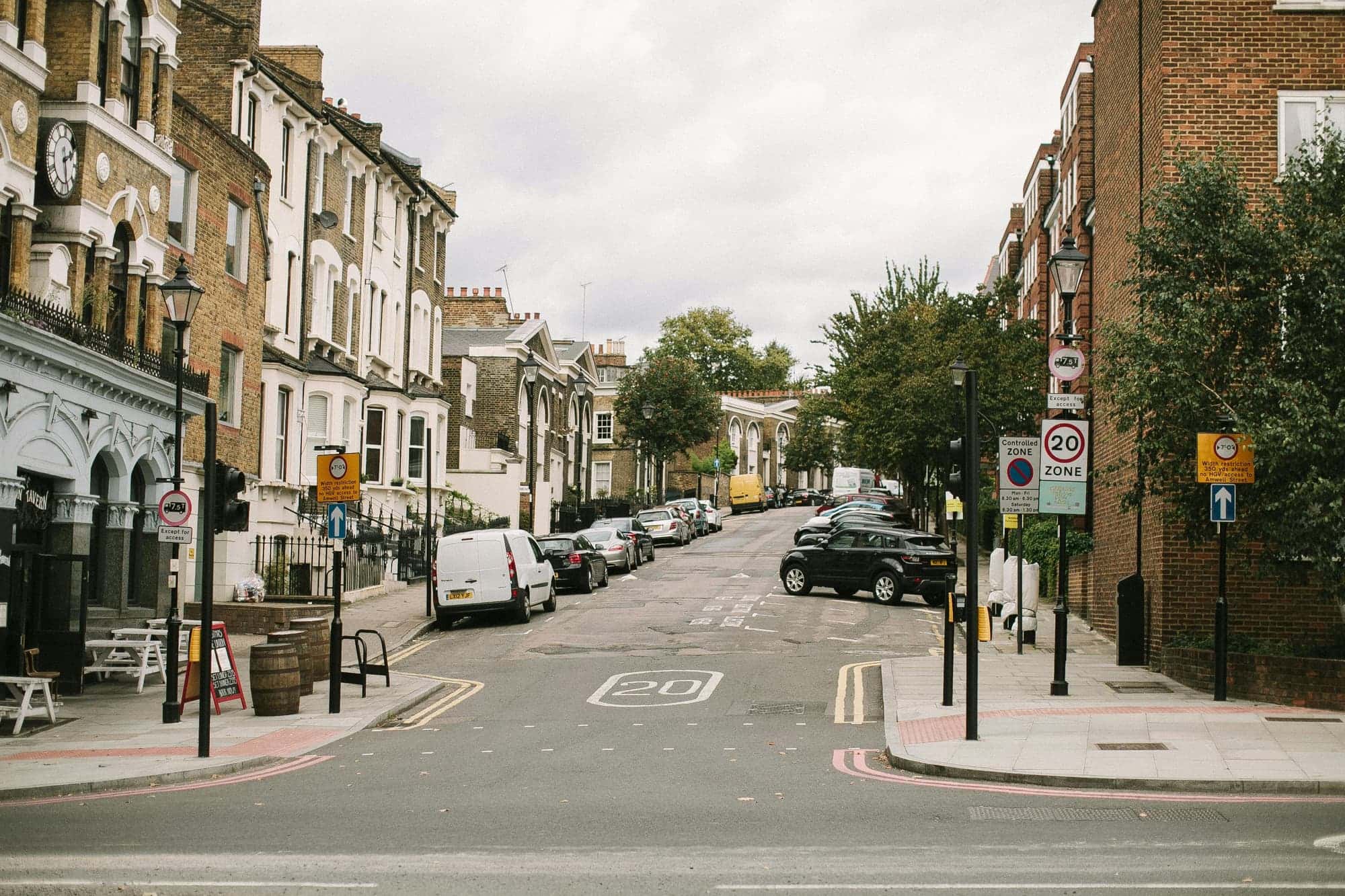
Residential surveyor in Putney
Putney grew from a riverside settlement at the Thames crossing, and the land rises south from the Embankment and Lower Richmond Road to the high ground of Putney Heath. Its housing runs from Victorian terraces and late Victorian riverside houses to Edwardian and 1930s mansion flats, with the post-war Alton Estate at Roehampton to the west. It is in the London Borough of Wandsworth.
Level 2 from £649, Level 2 Plus from £849, Level 3 from £895, including all taxes and fees.
- SW15
Local property context
What matters when surveying in Putney
Putney purchases split broadly by height. Near the river buyers are looking at Victorian terraces, late Victorian houses and Edwardian mansion flats. Up the hill and around Putney Heath they are looking at larger houses and 1930s mansion flats. The survey needs to read each building in its setting: water and drainage on the low ground, and the maintenance demands of large roofs, extensions and shared blocks higher up.
A Level 2 Plus suits most mansion flats and flats in converted houses, because the condition of the roof, walls and common parts matters as much as the flat. A Level 3 is the better choice for a large or extended house, a riverside house with a long rear garden, or a property you plan to alter. A Level 2 can suit a newer flat in a well-managed block.
Local knowledge for Putney buyers
The Putney Embankment Conservation Area, first designated in 1971, covers the boathouses, Lower Richmond Road and Ruvigny Gardens. The Embankment in its present form was built in 1887 and 1888 by the parish surveyor J. C. Radford. Lower Richmond Road has Winchester House of around 1730, early 19th century cottages and mansion blocks such as Kenilworth Court of 1902 to 1904. Just east, Deodar Road has three-storey red-brick pairs built after 1896, mostly by Morrison and Hulbert, whose long rear gardens back onto the Thames. The council notes that large rear extensions there have harmed the view of the houses from the river.
Putney Heath Conservation Area sits on the high ground and mixes Victorian villas and Edwardian detached houses with 1930s mansion flats, including Manor Fields, built in 1932 and 1933 by John Laing and Son, and Wildcroft Manor of 1936. For these blocks the survey report is best read alongside the service charge accounts, the reserve fund and any planned window, roof or lift works.
Beverley Brook runs along the western edge of the borough and joins the Thames at Barn Elms, upstream of Putney. The streets nearest the river are the lowest in Putney, so the Environment Agency long term flood risk check is worth reading for any address there. A standard survey does not inspect river walls or garden structures at the water’s edge, so ask who maintains them.
Property types in the area
- Victorian and Edwardian terraces
- Late Victorian semi-detached houses near the river
- Edwardian and 1930s mansion flats
- Large detached houses near Putney Heath
- Post-war estate flats and maisonettes in Roehampton
- Modern riverside apartments
Condition themes to consider
These are prompts for inspection, not a prediction that a particular home has a defect.
- Clay shrinkage movement near mature trees
- Damp and drainage on low-lying riverside streets
- Large rear extensions and loft conversions
- Service charges and major works in mansion blocks
- Roof coverings and chimneys on large period houses
- Concrete and window condition in post-war blocks
Before exchange of contracts
- For a house with a garden on the river, ask who owns and maintains the river wall and when it was last inspected.
- For a mansion flat, ask for the service charge accounts, reserve fund and any notice of major works.
- Ask the conveyancer for approvals covering rear extensions and loft conversions, particularly in the conservation areas.
- Read the Environment Agency long term flood risk result for addresses near the river or Beverley Brook.
Putney survey questions
- Does a survey cover the river wall at the end of a Deodar Road garden?
- No, a home survey does not inspect river walls or structures at the water’s edge in detail. JBS Surveying records what could be seen from the garden and flags anything that warrants further advice. Your conveyancer should establish who owns and maintains the wall, and whether there are records of inspections or repairs.
- Which survey do I need for a property in Putney?
- A Level 2 Plus suits most mansion flats and flats in converted houses, because the condition of the roof, walls and common parts matters as much as the flat. A Level 3 is the better choice for a large or extended house, a riverside house with a long rear garden, or a property you plan to alter. A Level 2 can suit a newer flat in a well-managed block.
- How much does a home survey cost in Putney?
- For homes up to £500,000, JBS Surveying charges from £649 for a Level 2, £849 for a Level 2 Plus and £895 for a Level 3, including all taxes and fees. Fees rise in steps with the property’s price, so we confirm the exact fee in writing once we know the price and the property.
- What problems do surveyors often find in Putney homes?
- Common themes in Putney include clay shrinkage movement near mature trees, damp and drainage on low-lying riverside streets, large rear extensions and loft conversions and service charges and major works in mansion blocks. These are prompts for the inspection, not a prediction that a particular home has a defect; the report rates each part of the property and says what to do next.
- Is Putney at risk of subsidence or flooding?
- Much of south west London sits on London Clay, which shrinks and swells with moisture, while land nearer the Thames lies on river gravels and alluvium, where groundwater and flood risk matter more than clay shrinkage. Ground conditions vary street by street: the British Geological Survey GeoIndex shows the geology for an address, and the Environment Agency’s long term flood risk service shows the flood risk for the postcode. The survey reports any signs of movement or damp it finds and when to involve a structural engineer or insurer.
- Do you cover SW15?
- Yes. JBS Surveying is based in Queen’s Park, NW6, and surveys homes in Putney (SW15) and across London. Joe Weaver, AssocRICS, RICS Registered Valuer and MRPSA, inspects every property and writes every report. Level 2 and Level 2 Plus reports are typically issued within 5 working days of the inspection and Level 3 reports within 7.
Putney survey enquiries
Tell us about the property before you choose
Send the Putney postcode, sales particulars and any concerns you already have. JBS will confirm coverage and explain which survey level appears proportionate before you book.
Official guidance and further reading
These independent sources explain the wider professional, legal and maintenance context. They do not replace advice about the particular property or its title.
- Wandsworth CouncilPutney Embankment Conservation Area appraisal and management strategyThe riverside, boathouses, Lower Richmond Road and Ruvigny Gardens, with the history of the Embankment.
- Wandsworth CouncilDeodar Road Conservation Area appraisal and management strategyThe late Victorian houses whose long rear gardens back onto the Thames, and the council’s concerns about rear extensions.
- Wandsworth CouncilPutney Heath Conservation Area appraisal and management strategyVillas, Edwardian houses and 1930s mansion flats on the high ground around Putney Heath.
- GOV.UKCheck your long term flood riskEnvironment Agency flood risk from rivers, the sea, surface water and reservoirs for any address.
- RICSHouse surveys: the costs, types and benefits of oneHow property age, condition and complexity influence the appropriate level of home survey.
- GOV.UKHow to buy a homeGovernment guidance on surveys, legal work and the wider home-buying process in England and Wales.
- GOV.UKBuying or owning a leasehold homeAn explanation of leasehold ownership, responsibilities, service charges and permissions.
Survey options in Putney
All three follow the RICS Home Survey Standard and use the same condition ratings. The difference is how much the report explains, and all three are available in Putney.
Level 2 Home Survey
Conventional houses and flats in reasonable condition
from £649
Report typically 5 working days after the inspection
Level 2 Plus Home Survey
Converted, period or higher-value flats, and well-kept homes where you want more explanation
from £849
Report typically 5 working days after the inspection
Level 3 Building Survey
Older, larger, altered or unusual properties, or where you plan significant work
from £895
Report typically 7 working days after the inspection
Valuations from £325. See valuations
Neighbouring areas we cover
South West London
Fulham
Fulham offers a mix of Victorian terraces, Edwardian houses and an increasing number of modern apartment developments. The area has seen significant investment and renovation, which means surveyors frequently encounter properties that have been extended, converted or substantially altered, each requiring careful assessment.
View area guidanceSouth West London
Wandsworth
Wandsworth Town grew where the River Wandle meets the Thames, and SW18 spreads south from there through the streets around Wandsworth Common to Earlsfield and Southfields. Most of the housing is Victorian and Edwardian, with 1930s council estates in Earlsfield, early 20th century terraces in Southfields and newer flats along the river and in the town centre.
View area guidanceSouth West London
Wimbledon
Wimbledon has an old village on the hill beside Wimbledon Common and a town below it that grew after the railway opened in 1838. It is in the London Borough of Merton, with large Victorian and Edwardian houses on and around the hill, terraces in the town and towards Raynes Park, and mansion blocks and newer flats near the centre.
View area guidanceSouth West London
Battersea
Much of Battersea was built on low-lying fields beside the Thames from the 1860s onwards, as planned estates of terraces, villas and later mansion blocks. Most of it is in the London Borough of Wandsworth, and the riverside around Nine Elms and Battersea Power Station has seen large new apartment developments.
View area guidanceSouth West London
South West London
South West London covers the SW postcode districts, from the inner areas around Chelsea, Fulham and Kensington to the riverside and suburban districts south of the Thames in Lambeth, Wandsworth and Merton. The housing ranges from planned Victorian estates and Edwardian terraces to mansion blocks, large houses on the higher ground at Wimbledon and Putney, and new riverside apartments. Each district below has its own page because the stock, ground and planning controls change from one to the next.
View area guidance