
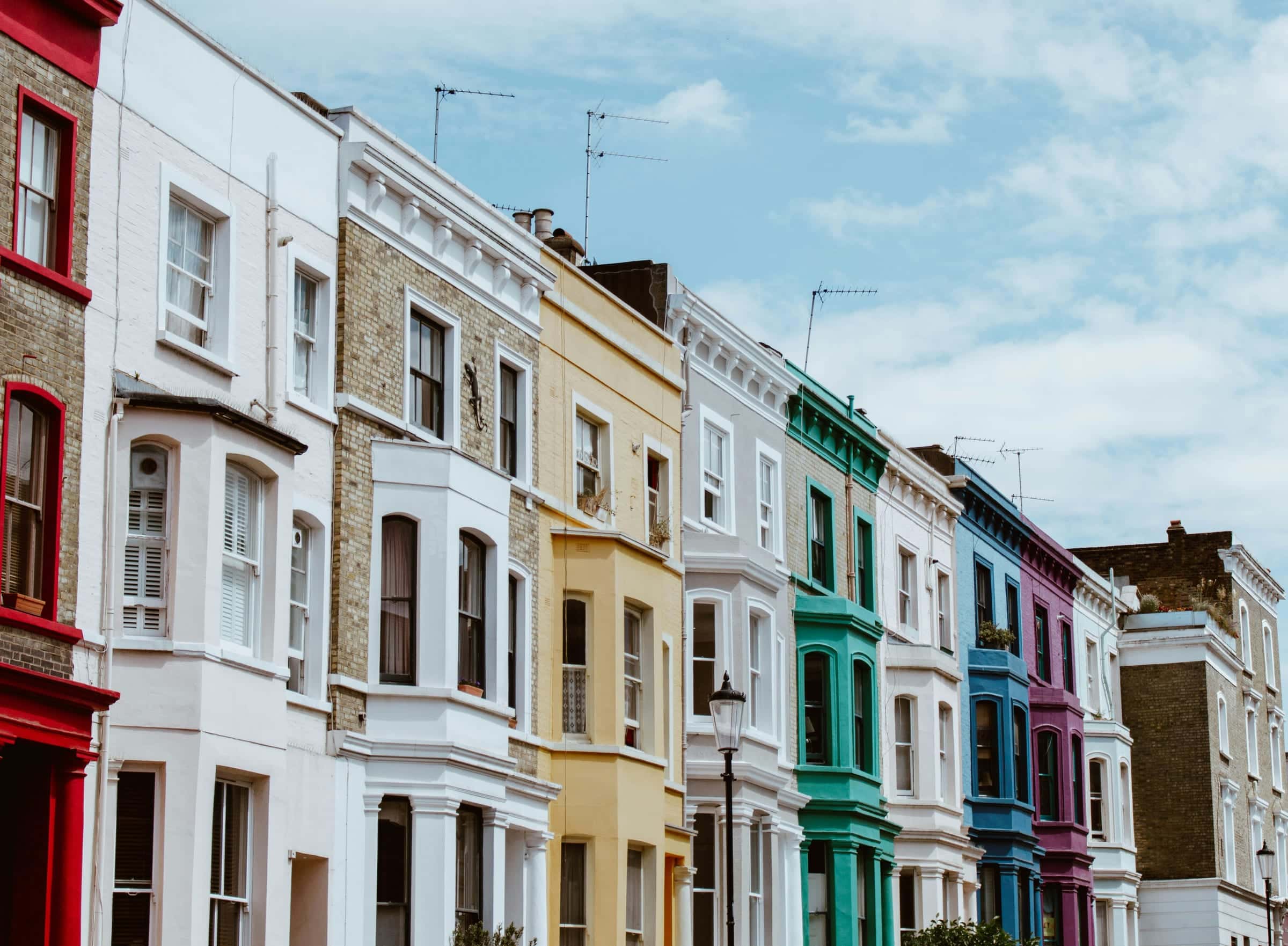
Residential surveyor in Bermondsey
Bermondsey grew around its medieval abbey on low, once marshy ground beside the Thames, and later became known for leather working and riverside wharves. Shad Thames and St Saviour’s Dock are lined with nineteenth century warehouses, most now flats, alongside older houses, large council estates and modern developments, all in Southwark.
Level 2 from £649, Level 2 Plus from £849, Level 3 from £895, including all taxes and fees.
- SE1
- SE16
Local property context
What matters when surveying in Bermondsey
Many Bermondsey purchases are flats in converted Victorian warehouses around Shad Thames and St Saviour’s Dock, or in newer riverside blocks, alongside period houses and council-built flats inland. For a warehouse flat, the condition of the building envelope, the lease and the management of a large shared structure matter as much as the flat, and the low-lying riverside setting brings flood questions.
A Level 2 Plus suits most flats in converted warehouses and well-run blocks, because it explains how the building was constructed and converted and what could be seen of the shared parts. A Level 3 is the better choice for a period house, a ground or lower ground floor flat with damp, or a building with obvious alterations or disrepair.
Local knowledge for Bermondsey buyers
The Shad Thames warehouses were largely rebuilt from the 1870s, with landward blocks following in the 1880s and 1890s, generally six storeys high, and many around St Saviour’s Dock date from 1850 to 1890. Most are now flats. They have thick yellow stock brick walls, deep arched openings, iron gangways and wall ties, and later conversions added features such as steel balconies at former loading doors. Junctions between old fabric and these additions are common places for water to get in.
Bermondsey was originally marshy ground liable to flood, and Bermondsey Street sits between 2 and 4 metres above Ordnance Datum. The riverside relies on the Thames tidal walls and the Thames Barrier, and Southwark’s flood risk assessment describes the remaining risk as residual, linked to overtopping or breach. Ground floor and basement flats warrant particular attention to damp and to the building’s flood resilience.
The Tower Bridge, St Saviour’s Dock and Bermondsey Street conservation areas cover much of the historic core, so changes to windows and frontages may need consent. For any flat in a large block, the conveyancer should obtain the lease, service charge accounts, planned major works and fire safety information.
Property types in the area
- Warehouse conversions
- Victorian and older terraced houses
- Post-war and earlier council estates
- Modern riverside apartment blocks
- Flats above shops on Bermondsey Street
- Purpose-built flats from the 1980s and 1990s
Condition themes to consider
These are prompts for inspection, not a prediction that a particular home has a defect.
- Tidal flood risk on low-lying land behind the Thames defences
- Condition of brick and iron in converted warehouses
- Water penetration through parapets and old openings
- Fire safety and service charges in large blocks
- Lease responsibility for structure and windows
- Basement and ground floor damp
Before exchange of contracts
- Check the long term flood risk for the address on GOV.UK and ask the insurer about cover for the building.
- Ask the managing agent about past water penetration, window replacement and external repair programmes.
- Ask the conveyancer for the building’s fire safety information and any major works notices.
- For a ground or lower ground floor flat, mention any damp or flood history the seller has disclosed.
Bermondsey survey questions
- What should I check before buying a warehouse flat in Bermondsey?
- Look at the building as well as the flat. Converted warehouses have thick brick walls, old openings, ironwork and later balconies where water can get in, and repairs are shared through the service charge. JBS Surveying reports on what could be seen, and you should ask the managing agent about past leaks, window replacement and planned major works.
- Which survey do I need for a property in Bermondsey?
- A Level 2 Plus suits most flats in converted warehouses and well-run blocks, because it explains how the building was constructed and converted and what could be seen of the shared parts. A Level 3 is the better choice for a period house, a ground or lower ground floor flat with damp, or a building with obvious alterations or disrepair.
- How much does a home survey cost in Bermondsey?
- For homes up to £500,000, JBS Surveying charges from £649 for a Level 2, £849 for a Level 2 Plus and £895 for a Level 3, including all taxes and fees. Fees rise in steps with the property’s price, so we confirm the exact fee in writing once we know the price and the property.
- What problems do surveyors often find in Bermondsey homes?
- Common themes in Bermondsey include tidal flood risk on low-lying land behind the Thames defences, condition of brick and iron in converted warehouses, water penetration through parapets and old openings and fire safety and service charges in large blocks. These are prompts for the inspection, not a prediction that a particular home has a defect; the report rates each part of the property and says what to do next.
- Is Bermondsey at risk of subsidence or flooding?
- South east London has more varied ground than the north and west: London Clay across much of it, sands and pebble beds on higher ground such as Blackheath, and river alluvium near the Thames, where flood risk is a bigger question than clay shrinkage. Ground conditions vary street by street: the British Geological Survey GeoIndex shows the geology for an address, and the Environment Agency’s long term flood risk service shows the flood risk for the postcode. The survey reports any signs of movement or damp it finds and when to involve a structural engineer or insurer.
- Do you cover SE1 and SE16?
- Yes. JBS Surveying is based in Queen’s Park, NW6, and surveys homes in Bermondsey (SE1 and SE16) and across London. Joe Weaver, AssocRICS, RICS Registered Valuer and MRPSA, inspects every property and writes every report. Level 2 and Level 2 Plus reports are typically issued within 5 working days of the inspection and Level 3 reports within 7.
Bermondsey survey enquiries
Tell us about the property before you choose
Send the Bermondsey postcode, sales particulars and any concerns you already have. JBS will confirm coverage and explain which survey level appears proportionate before you book.
Official guidance and further reading
These independent sources explain the wider professional, legal and maintenance context. They do not replace advice about the particular property or its title.
- Southwark CouncilTower Bridge Conservation Area appraisalThe Shad Thames and Butler’s Wharf warehouses, their construction and their conversion to housing.
- Southwark CouncilSt Saviour’s Dock Conservation Area appraisalThe later nineteenth century warehouses around the dock, most now converted to flats.
- Southwark CouncilBermondsey Street Conservation Area appraisalThe history of Bermondsey Street, its leather trades and its low-lying riverside setting.
- GOV.UKCheck your long term flood riskEnvironment Agency flood risk from rivers, the sea, surface water and reservoirs for any address.
- RICSHouse surveys: the costs, types and benefits of oneHow property age, condition and complexity influence the appropriate level of home survey.
- GOV.UKHow to buy a homeGovernment guidance on surveys, legal work and the wider home-buying process in England and Wales.
- GOV.UKBuying or owning a leasehold homeAn explanation of leasehold ownership, responsibilities, service charges and permissions.
Survey options in Bermondsey
All three follow the RICS Home Survey Standard and use the same condition ratings. The difference is how much the report explains, and all three are available in Bermondsey.
Level 2 Home Survey
Conventional houses and flats in reasonable condition
from £649
Report typically 5 working days after the inspection
Level 2 Plus Home Survey
Converted, period or higher-value flats, and well-kept homes where you want more explanation
from £849
Report typically 5 working days after the inspection
Level 3 Building Survey
Older, larger, altered or unusual properties, or where you plan significant work
from £895
Report typically 7 working days after the inspection
Valuations from £325. See valuations
Neighbouring areas we cover
South East London
Camberwell
Camberwell’s village centre sits at the foot of a hill, and wealthy families built up the slope from the 1770s, giving Camberwell Grove and Grove Lane long runs of Georgian town houses. Later Victorian and Edwardian streets, hospital and college buildings and post-war estates fill the rest of SE5, which lies mostly in Southwark.
View area guidanceSouth East London
Peckham
Peckham was a small settlement in Camberwell parish until the canal and then the railway, which arrived in 1865 and 1866, turned it into a busy suburb with Rye Lane as its shopping street. The housing mixes early nineteenth century villas around Holly Grove, Victorian terraces, homes above shops and large post-war estates, all within Southwark.
View area guidanceSouth East London
Greenwich
Greenwich grew from a Thames-side village around the royal palace and later Greenwich Hospital, and Maritime Greenwich was inscribed as a World Heritage Site in 1997. Housing in SE10 ranges from early Georgian houses on Crooms Hill to plain Victorian cottages, post-war council flats and newer apartment blocks along the river and on the Greenwich Peninsula, all within the Royal Borough of Greenwich.
View area guidanceCentral London
Central London
Central London presents unique surveying challenges. The housing stock is predominantly flats, both purpose-built and converted, within period buildings of significant age and often considerable alteration. Access can be complex, leasehold arrangements are the norm, and the interplay between individual units and shared structure requires careful assessment.
View area guidanceSouth East London
South East London
The SE postcodes run from the riverside warehouses of Bermondsey and Greenwich, through the Georgian and Victorian suburbs of Camberwell, Peckham and Brockley, to the hills of Forest Hill and Sydenham. Most of the area falls within Southwark, Lewisham and the Royal Borough of Greenwich, with parts of Lambeth around Herne Hill.
View area guidance